Building date: Between 1839 and 1845. c. 1855 "Cobblestone Structures in Onondaga County #21, compiled by Glenn Hinchey.
Original use:
Corner structures:
Mortar application and content:
Types and uses of stones: Small Cobblestones.
Types and choice of windows:
Structures with similar masonry details:
Masons who worked on building:
Unique features: Italianate / Greek Revival. Bracketed cornice, low-pitched roof, scars on front where original porch was removed. "Cobblestone Buildings in Onondaga County", 1992, Structure No. 7, compiled by Glenn Hinchey.
Map views courtesy Google Maps. Address is Google Earth confirmed; 43°04'21.11"N 76°09'36.35"W. Current owner of record, Sagacious Holdings Group LLC as of the 2018 Tax Roll.
City of Syracuse and Onondaga County Maps
This house at 1408 (originally 373) Spring St., Syracuse, is believed to have been built between 1839 and 1845 by Nelson and Betsy Phillips. In 1845 it was sold to Elizur Clark, a local entrepreneur. who came to Salina in 1823. He was involved in many businesses including banking to operating sawmills.
Clark participated in the California Gold Rush as well as the Nicaragua Transit Co., predecessor of the Panama Canal. It was later the home to who may have been his son, William G. Clark, a grocer and salt manufacturer. It was built at the time this area was in the village of Salina.
While the overall styling is an Italian Villa of the 1870s, with its huge brackets and overhanging low hipped roof, the original cobblestone house was probably designed as a Greek Revival mansion, similar in style to the National Hotel in Salina. Unfortunately it fell on evil times and the original porch and cupola were removed. Richard Palmer blog.
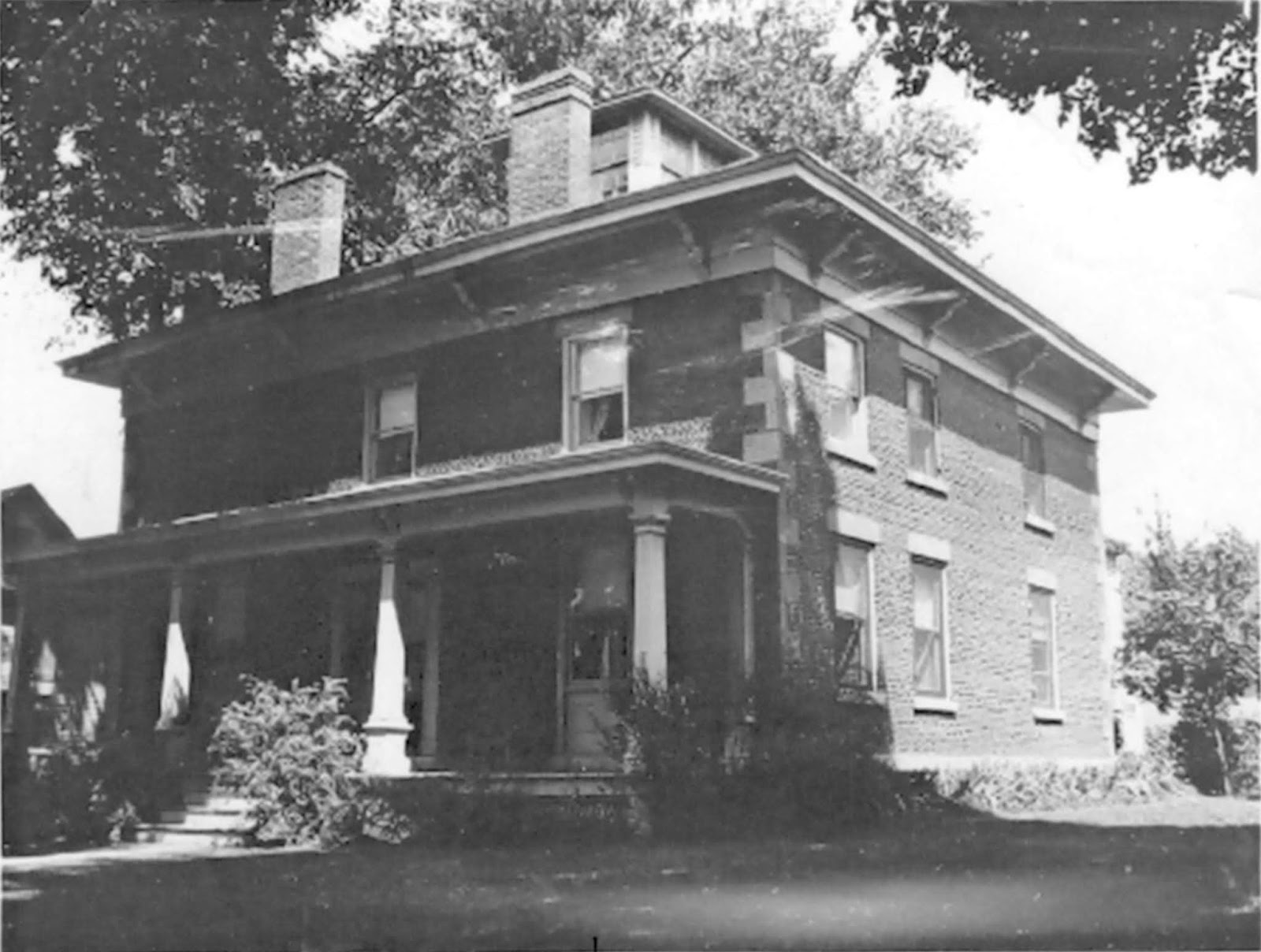 Scan 1.jpg ¹ | 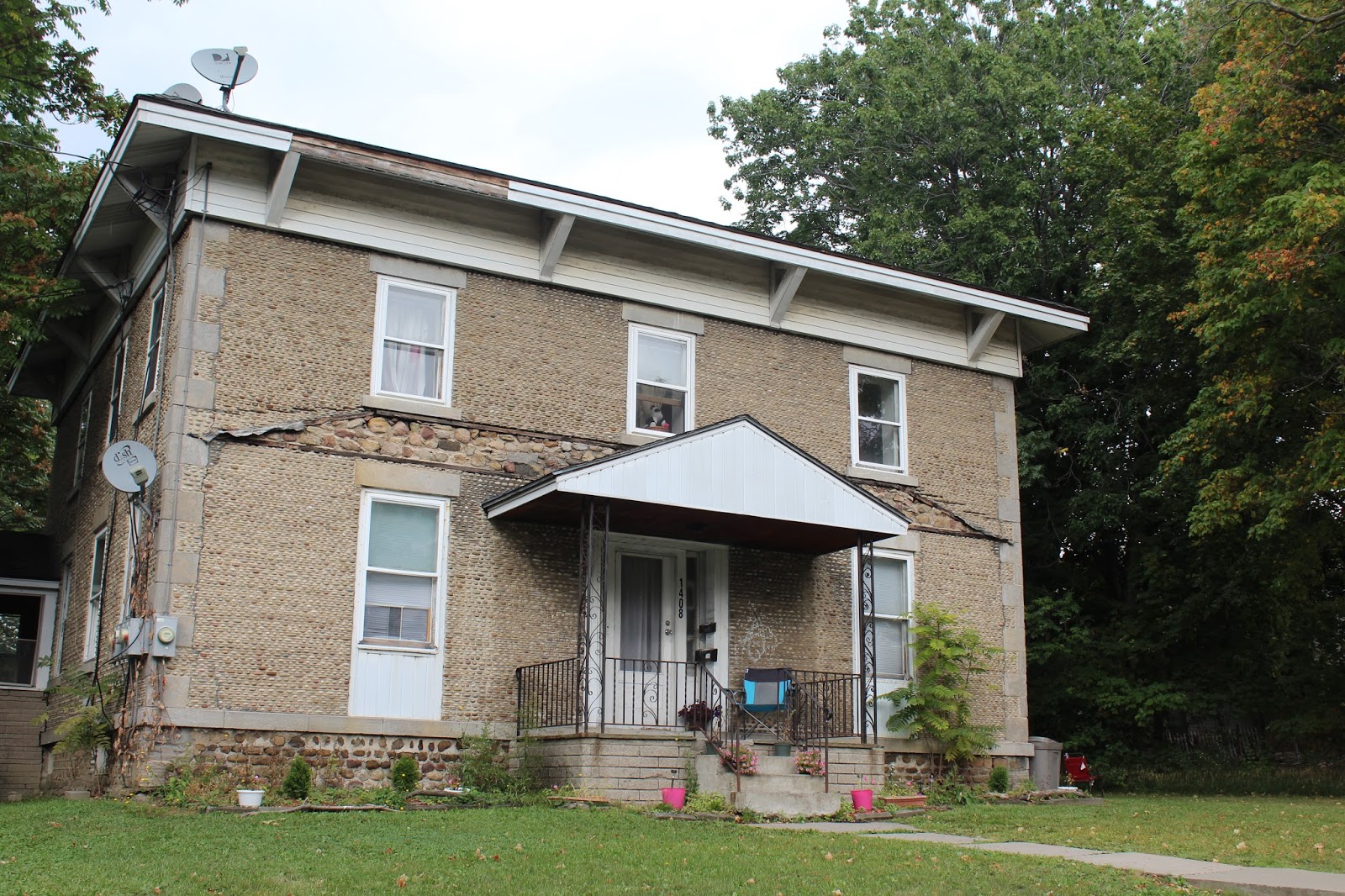 1408 Spring St., Syracuse.jpg ² |
¹ Image courtesy Onondaga Historical Association.
² Photography courtesy Richard Palmer.
